
When it comes to success—whether in work, relationships, or personal goals—your mindset isn’t just part of the game. It is the game. The way you think about your abilities, challenges, and failures determines whether you’ll rise or retreat when life gets tough. Enter two powerful concepts: the Growth Mindset and the Fixed Mindset.
So, what’s the difference? And more importantly, how can you develop a growth mindset to become unstoppable?
What is a Growth Mindset?
A growth mindset, a term coined by psychologist Carol Dweck, is the belief that your abilities and intelligence can be developed through effort, learning, and persistence. It’s about seeing challenges as opportunities and failures as lessons.
People with a growth mindset say things like:
“Every expert started as a beginner.”
“I can learn this if I put in the work.”
“Failure is feedback.”
The Science Behind a Growth Mindset
Research shows that our brains are malleable. Neural pathways strengthen with practice and effort, meaning skills and intelligence aren’t set in stone. Every time you push through a challenge, your brain literally grows stronger. Understanding this science helps shift your belief from “I can’t” to “I can
What is a Fixed Mindset?
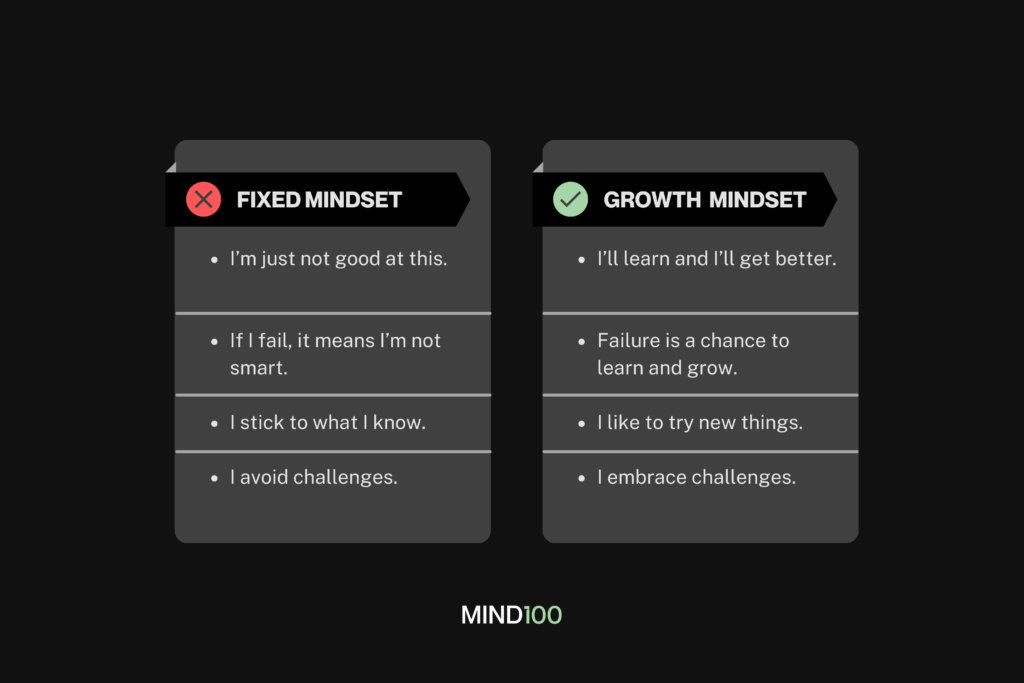
On the flip side, a fixed mindset believes abilities are static. You either have it, or you don’t. Challenges are threats, and failure is proof of inadequacy.
People with a fixed mindset might think:
“Why bother trying if I might fail?”
“I’m just not good at this.”
“I failed, so I’m not cut out for it.”
The Trap of a Fixed Mindset
A fixed mindset often leads to avoidance—avoiding challenges, feedback, or situations where failure is possible. But growth happens outside your comfort zone. By staying in “safe spaces,” you’re limiting your potential.
Why Does Your Mindset Matter?
Your mindset influences everything: how you approach goals, handle setbacks, and deal with criticism. A growth mindset fuels resilience, adaptability, and grit. A fixed mindset keeps you stuck.
Mindset in Action:
Consider two students given a challenging math problem. The one with a fixed mindset gives up after a few failed attempts, thinking they’re “just not good at math.” The one with a growth mindset keeps trying different approaches, asking questions, and eventually finds a solution. The difference? One saw failure as proof of inadequacy; the other saw it as part of learning.
5 Strategies to Build a Growth Mindset
1. Embrace Challenges
Stop avoiding what feels hard. Growth happens at the edge of your comfort zone. Tackle challenges head-on and remind yourself: “This is where I grow.”
Try this: Next time you face a difficult task, pause and say, “I may not be good at this yet, but I’m learning.”
2. Reframe Failure as Feedback
Failure isn’t the end—it’s data. Every mistake teaches you something valuable. Growth mindset people see failure as part of the process, not the finish line.
Try this: After a setback, ask yourself, “What can I learn from this? What will I do differently next time?”
3. Focus on Effort, Not Outcome
Celebrate the work you put in, not just the result. Progress comes from consistent effort, and every small step counts.
Try this: At the end of each day, write down one thing you did well—no matter how small.
4. Surround Yourself with Growth-Oriented People
Your environment matters. Spend time with people who encourage learning, resilience, and progress.
Try this: Find a friend, coach, or mentor who pushes you to grow and supports your journey.
5. Use the Word “Yet”
One simple word can shift your mindset: YET. You’re not bad at math—you just haven’t mastered it yet.
Try this: Anytime you catch yourself thinking, “I can’t do this,” add “yet” to the end.
How to Overcome Common Growth Mindset Barriers
Fear of Judgment: Remind yourself that everyone starts somewhere. No one expects perfection from day one.
Impatience: Growth takes time. Focus on progress, not instant results.
Self-Doubt: Silence your inner critic with positive affirmations and evidence of past success.
Comparison: Comparing your journey to someone else’s is like comparing a seed to a tree. Everyone grows at their own pace.
Fear of Failure: Failure isn’t a reflection of who you are; it’s just a result. Learn from it, adjust, and keep moving.
The Mindset You Choose Shapes Your Life
Adopting a growth mindset isn’t about ignoring failure or pretending everything is easy. It’s about showing up, putting in the work, and believing you can get better.
So, what mindset are you choosing today? Remember: Your potential isn’t fixed. It’s waiting to be unlocked. Now go out there and grow.
Ready to elevate your mind and transform your life? Start now.
Growth Mindset vs Fixed Mindset FAQs
A fixed mindset is the belief that abilities and intelligence are static traits, while a growth mindset is the belief that skills and intelligence can be developed through effort, learning, and perseverance. People with a growth mindset are more likely to embrace challenges and view failures as opportunities to grow.
A growth mindset fosters resilience, adaptability, and a willingness to learn from mistakes. It helps you overcome obstacles, stay motivated in the face of setbacks, and continually improve your skills and knowledge, leading to greater success in both your personal and professional life.
Shifting to a growth mindset involves embracing challenges, learning from criticism, celebrating effort over outcomes, and viewing failures as learning opportunities. Consistent self-reflection and practicing positive self-talk can also help reinforce a growth-oriented perspective.
Yes, you can have a mix of fixed and growth mindsets depending on the situation or area of your life. For example, you might have a growth mindset about learning a new hobby but a fixed mindset about your math skills. The goal is to recognize these patterns and actively work on developing a growth mindset in all areas.
Yes, exercises like journaling about challenges, reframing negative thoughts, setting achievable goals, celebrating small wins, and practicing gratitude can help you shift towards a growth mindset. Regular self-awareness and reflection are also key.
Share this post
Ready to be better?
Our self-help app is launching soon.
Sign up now for early access!